

Quick answer: A real estate website in the USA can cost anywhere from $1,000 to $40,000+, while larger brokerage and enterprise platforms can go well beyond that. The final price depends mainly on the type of website, IDX/MLS integration, design, lead-generation features, and ongoing maintenance.
Real Estate Website Development Cost in the USA in 2026?
A real estate website can cost anywhere from $200 to $100,000+. For most real estate agents and small brokerages, a realistic first-year budget is around $1,000 to $19,000 once you include website development, IDX access, hosting, and other ongoing costs.
At the higher end, custom platforms with advanced search, MLS data, CRM integrations, and large property databases can easily cost six figures. These are the types of systems built for businesses that need something closer to a Zillow- or Redfin-style experience.
Market Size Overview: The global real estate market is projected to reach approximately US$624.62 trillion in 2026, with the market expected to reach around US$725.05 trillion by 2031, according to Statista’s global real estate market forecast. The figures represent the broader global real estate market rather than the market for real estate websites or software.
The wide price range can be confusing because a $30-per-month template website and a $100,000 custom real estate platform are both technically “real estate websites.” The real difference is what the website needs to do.
A simple website may only display an agent’s services and a few properties. A more advanced property website may connect to an MLS, show live property listings, capture leads, connect with a CRM, and give visitors a detailed online property search.
Here’s what you can realistically expect to pay and what affects the final cost.
What Is a Real Estate Website?
A Platform for Buying, Selling, Renting, or Managing Property
A real estate website is an online platform built for buying, selling, renting, or managing property and for the agency behind it, it doubles as a branding and communication tool. Most agents and brokerages build one primarily to showcase their active listings, though the exact format depends on the goal: it could be a marketplace pulling in listings from multiple agents, a brand-focused site promoting one agency’s services, or a catalog-style portal built around detailed listings and search filters.
Why a Website is Essential for Your Real Estate Business Growth
A real estate website is not just an online digital business card, it is your 24/7 sales machine and brand headquarters. In today’s digital-first market, buyers and sellers search online before making any move.

Here is advantages how a professional website directly drives your business growth:
- Establish Instant Trust & Credibility: Clients feel more secure working with an agent or brokerage that has a professional, polished online presence rather than just social media profiles.
- Generate High-Quality Leads on Autopilot: With built-in contact forms, saved searches, and property inquiry tools, your website captures potential buyers and sellers even while you sleep.
- Showcase Listings Professionally: Instead of relying on third-party platforms, you own your listings presentation, featuring high-resolution photos, virtual tours, and detailed property descriptions all in one place.
- Build Long-Term Organic Traffic (SEO): By publishing local neighborhood guides, market updates, and property listings, you attract local buyers directly from Google search without paying for ads forever.
- Complete Control Over Your Brand: Unlike social media algorithms that can change anytime, your website is 100% yours, giving you a centralized hub to scale your real estate business sustainably.
Build Your Real Estate Website?
Need a professional real estate website? Daigency can help you design and develop a website built for listings, leads, SEO, and growth.
What Is a Real Estate App?
The Features That Keep Visitors on the Page
Whatever the format, a handful of features show up again and again because they’re what actually keep visitors engaged: filters for price, location, and property type, an interactive map, a mortgage or payment calculator, high-quality photos, detailed property descriptions, and increasingly, a 3D or virtual tour option.
Real Estate Website Cost Breakdown by Type
| Website Type | Typical Cost | Best For |
| Template/DIY | $200–$1,000 | Solo agents needing a simple online presence |
| Semi-custom | $1,000–4,500 | Small teams wanting more control over design and branding |
| Custom | $2,000–$13,000+ | Growing agents and small brokerages |
| Brokerage-level | $19,000–$40,000+ | Larger brokerages with more complex requirements |
| Enterprise/Marketplace | $100,000–$180,000+ | Large platforms, franchises, and property marketplaces |
A template website is usually the quickest and cheapest option. You get pre-built layouts and basic website functionality, but customization is limited.
A semi-custom or custom website gives you more control over the user experience, custom branding, website design, and lead-generation process.
At the enterprise level, the website becomes a larger piece of real estate technology. It may involve multiple MLS connections, advanced APIs, large listing databases, CRM systems, agent dashboards, and custom property search functionality.
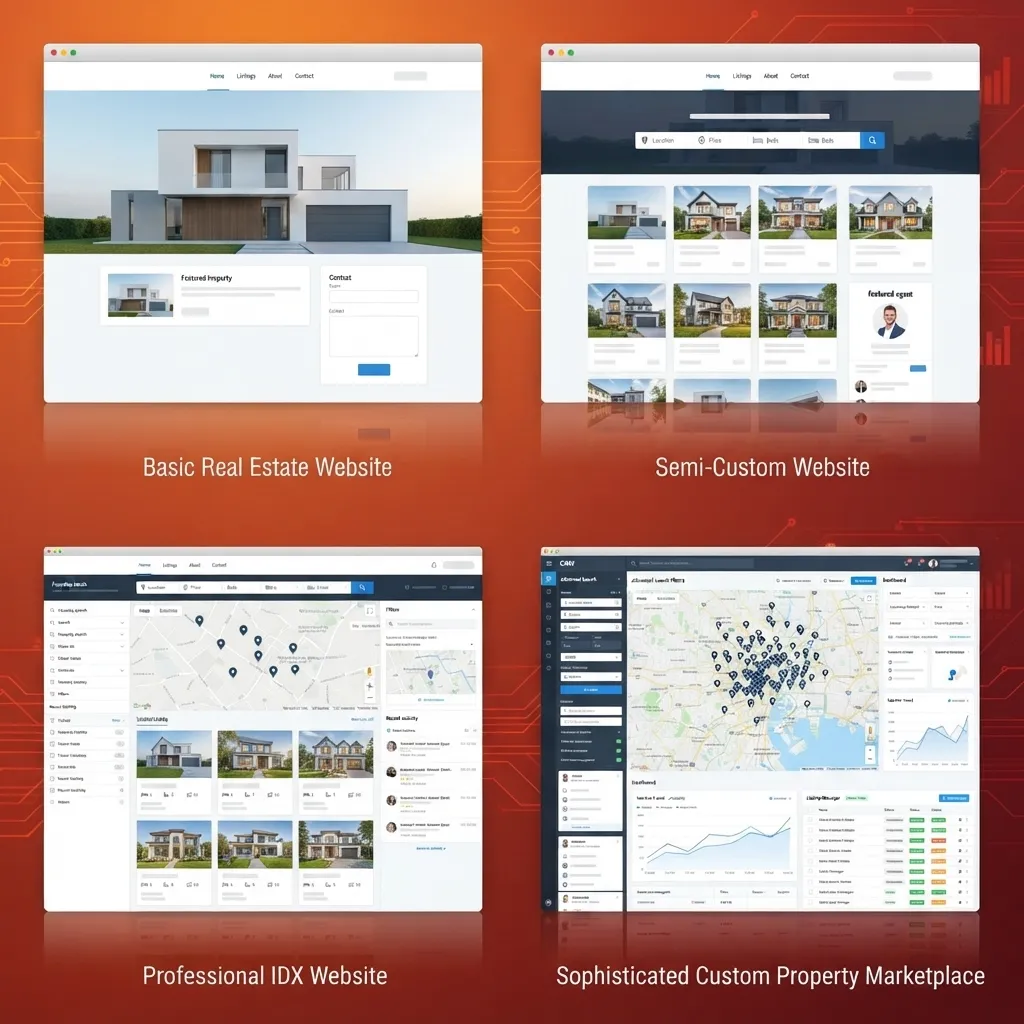
Note: The ranges above are industry estimates rather than fixed market prices. Actual development costs vary by location, developer rates, website complexity, MLS/IDX requirements, integrations, content, and ongoing services.
Four Common Ways to Build a Real Estate Website
Most agents and brokerages generally choose one of these approaches.
1. DIY Website Builders
Platforms such as Webflow, Wix and GoDaddy can get a basic website online quickly without hiring a developer.
This works well if your main goal is to have a simple real estate business website with your services, contact details, and a few manually added properties.
The downside is that advanced MLS and IDX functionality may require additional services or integrations.
2. WordPress + IDX
A WordPress website gives you more control over design, content, SEO, and customization.
You can add an IDX plugin or another IDX solution to display property listings and provide visitors with online property search functionality.
Typical costs may include:
- IDX: around $95–$125/month
- Hosting: around $15–$30/month
- Theme: around $50–$200
- Development and setup: varies by project
This approach can be a good fit for agents and small teams that want more control without paying for a completely custom platform.
3. Dedicated Real Estate Platforms
Dedicated real estate website design with features such as IDX, lead capture, and CRM functionality. The monthly cost can be higher than a basic website builder, but many of the tools are already built into the platform.
This can make sense for agents who want a ready-to-use system instead of managing WordPress, plugins, hosting, and integrations themselves.
4. Fully Custom Development
Custom development is where the pricing range becomes much wider.
A small custom real estate website may cost a few thousand dollars, while a larger development project involving custom APIs, MLS integration, CRM systems, advanced search, user accounts, and multiple markets can reach tens or even hundreds of thousands of dollars.
The important point is that “custom” does not have one fixed price. The development scope determines the cost.
IDX and MLS: Where Costs Can Increase Quickly
One of the biggest factors in real estate website pricing is IDX.
IDX stands for Internet Data Exchange. It is the technology used to display MLS listings on a real estate website.
MLS, or Multiple Listing Service, is the source of the property listing data. IDX is the technology that allows that data to be displayed to website visitors. They are related, but they are not the same thing.
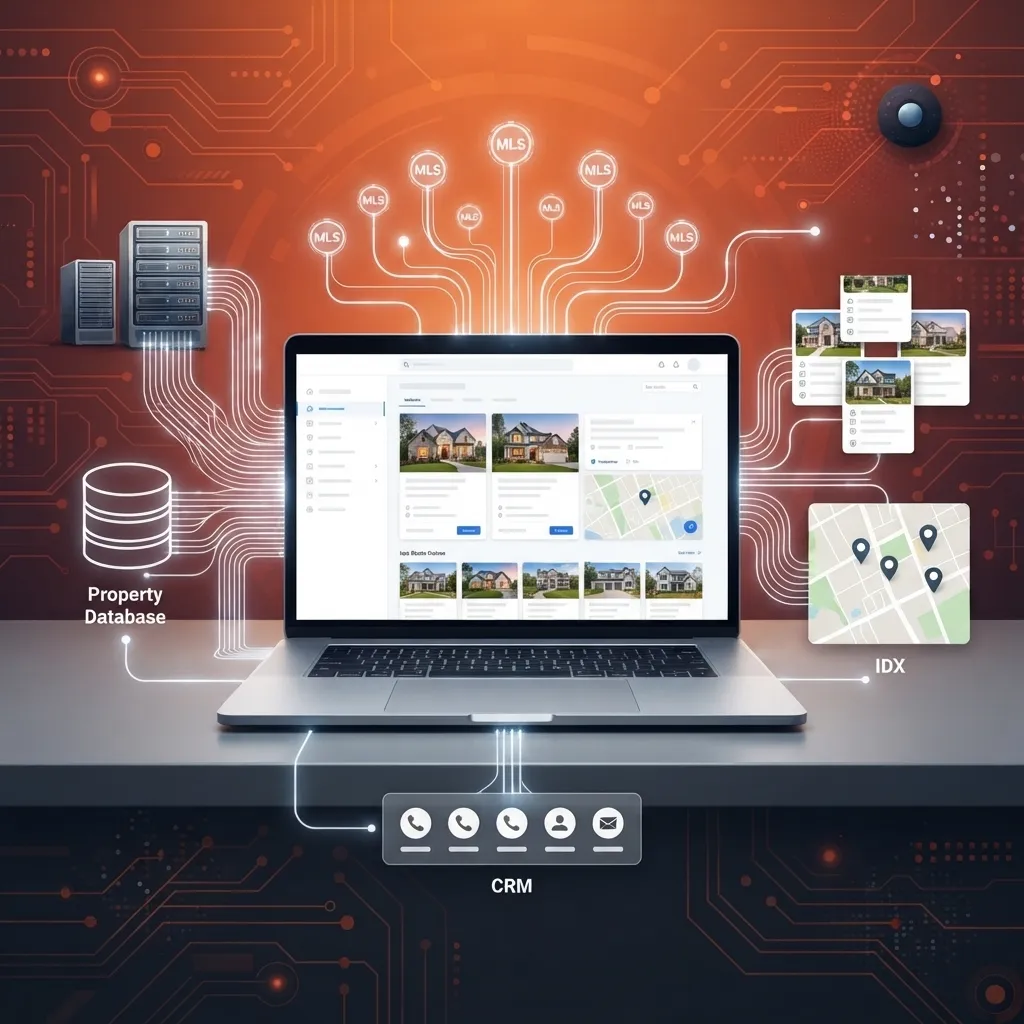
A real estate website may have several separate costs:
MLS Access
MLS membership or access fees vary by market and organization. A rough range can be around $25–$200 per month per agent, although actual fees depend on the MLS.
IDX Provider
The IDX service or plugin used to display listing data may cost approximately $50–$200 per month for a basic setup, while more customized solutions can cost considerably more.
IDX/MLS Integration
If the website requires custom MLS integration through an API, development costs can increase substantially.
A basic plugin installation may require little development work. A custom RESO Web API or similar integration can cost $8,000–$22,000+, depending on the requirements.
This is why asking a developer only, “How much does an IDX website cost?” does not always give you the full picture.
Before signing a contract, ask:
- Which MLS will be connected?
- Which IDX provider will be used?
- What are the monthly fees?
- Are MLS fees included?
- Who handles compliance?
- How often does listing data update?
- What happens if the MLS changes its requirements?
Ongoing Cost to Run a Real Estate Website?
The initial development cost is only part of the website budget.
After launch, you may have expenses for hosting, IDX, MLS access, website maintenance, SEO, security, and other services.
| Ongoing Cost | Typical Range |
| Domain | $10–$50/year |
| Website hosting | $5–$100/month |
| IDX | $50–$800/month |
| MLS access | $25–$200/month per agent |
| Website maintenance | $150–$1,200/month |
| SEO | $500–$4,000/month or $1,000–$15,000/project |
| Security cleanup | $150–$300 when required |
Not every real estate agent will need all of these services.
For example, a solo agent using a template website may spend much less than a brokerage running a custom platform with multiple agents and MLS connections.
What Actually Determines the Development Cost?
Several factors can change the cost of real estate web development.
IDX and MLS Integration
This is often one of the largest cost factors because it involves listing data, licensing, integration, compliance, and ongoing fees.
Design and Branding
A template costs much less than a completely custom interface.
If you want custom branding, unique page layouts, branded property search pages, custom graphics, and a carefully designed user experience, the website design cost will increase.
Property Search
A basic search box is inexpensive.
Advanced property search functionality with price ranges, locations, property types, bedrooms, bathrooms, map search, saved searches, and other filters requires more development.
Lead Generation
A real estate website should make it easy for potential buyers and sellers to contact the business.
Lead-generation features can include contact forms, property inquiry forms, saved searches, call-to-action sections, chat tools, and CRM connections.
The more advanced the lead capture system, the more development work may be required.
Third-Party Integrations
A website may connect with services such as:
- Google Maps
- Mortgage calculators
- CRM platforms
- Email marketing tools
- DocuSign
- Analytics platforms
- MLS/IDX services
- Other real estate marketing tools
Each integration may be relatively small on its own, but several integrations can add noticeably to the total development cost.
AI Features
Some real estate businesses are also adding AI features such as chat-based lead capture, natural-language property search, automated recommendations, or valuation tools.
These should generally be treated as separate development projects rather than standard website features.
Depending on the complexity, an AI feature can add thousands of dollars to the project.
What About SEO and Content?
A website can have excellent design and live property listings and still struggle to attract organic traffic. That’s where SEO becomes important.
For a real estate business, SEO may include:
- Local landing pages
- Property-related content
- Market pages
- Neighborhood pages
- Technical SEO (GSC)
- Mobile optimization
- Internal linking
- Metadata
- Helpful blog content
- Local search optimization
SEO should be considered part of the long-term website budget rather than something added at the very end.
A website that is technically strong but has little useful content may not perform as well as a simpler website with genuinely helpful information for local buyers and sellers.
What Might a First-Year Budget Look Like?
For a solo agent or small team, a realistic first-year budget may look something like this:
Basic website: $1,000–$4,500
This can cover a simple design, essential pages, hosting, and basic functionality.
Professional IDX website: $2,000–$13,000+
This may include custom website design, IDX setup, property search, lead capture, and initial optimization.
Small brokerage: $19,000–$40,000+
A brokerage may need more pages, multiple agents, CRM integration, IDX, SEO, custom branding, and ongoing website maintenance.
Large custom platform: $100,000–$180,000+
Complex requirements such as multiple MLS markets, custom APIs, advanced search, user accounts, dashboards, and proprietary functionality can push the cost much higher.
A Zillow- or Redfin-style platform can go beyond $100,000–$180,000+, especially when the project involves nationwide listing data, advanced search, valuation systems, and a large-scale technology infrastructure.
Website vs. Mobile App: Which Comes First?
For most real estate agents and small brokerages, a website is usually the starting point.
People can find a website through Google without installing anything. A website also avoids the cost of maintaining separate iOS and Android applications.
A mobile app can become useful later if there is a clear need for features such as:
- Push notifications
- Saved property alerts
- Agent tools
- In-app messaging
- Location-based features
- Frequent property searches
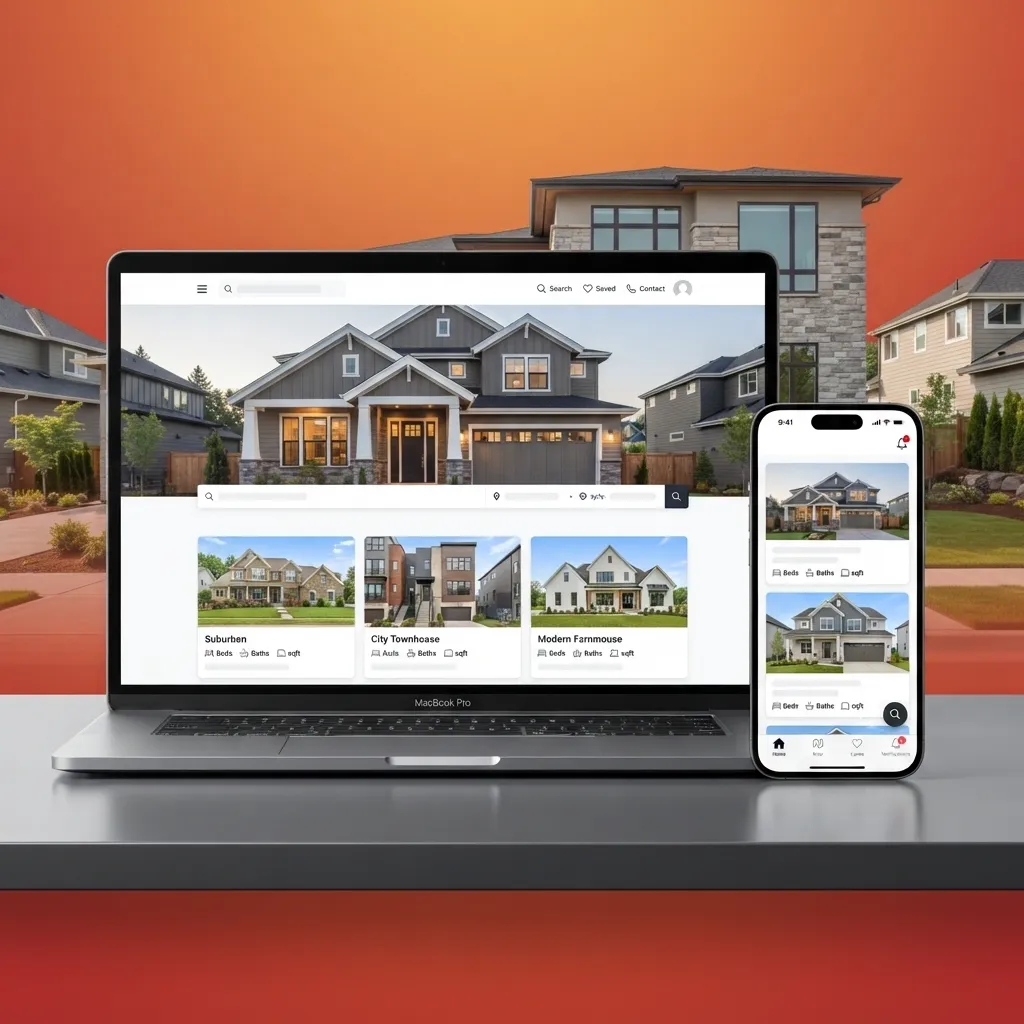
The important thing is to build around actual customer needs rather than adding an app simply because it sounds more advanced.
How to Estimate the Return on Your Website
Instead of relying on a generic ROI number, use your own business data.
Start with your total first-year website cost, including development and ongoing expenses.
Then estimate:
- How many leads the website could generate each month.
- How many of those leads become clients.
- Your average commission or deal value.
- Your total website and marketing investment.
- How long it would take to recover that investment.
This gives you a more useful picture of the website’s potential value because it is based on your market, conversion rate, and average transaction value.
Questions to Ask Before Hiring a Developer
Before approving a real estate website development quote, ask the developer exactly what is included.
- What pages are included?
- Is the website custom or template-based?
- Is IDX integration included?
- Are MLS fees separate?
- Which IDX provider will be used?
- Who manages MLS compliance?
- What are the monthly hosting costs?
- Is website maintenance included?
- Is SEO included?
- Are CRM and API integrations included?
- Who owns the website and its content after launch?
- Can the website be moved to another developer later?
- Are mobile optimization and responsive design included?
- What happens if the project requires additional development?
These questions help you compare the real website development cost, rather than comparing two different packages based only on their advertised starting prices.
How Much Should You Actually Budget: Real Estate Website Cost
There is no single price that applies to every real estate business.
A solo agent who needs a clean website with basic property information may be perfectly fine with a template or semi-custom solution.
An agent who depends heavily on online listings and lead generation may need a professional IDX website.
A growing brokerage may need custom branding, CRM integration, advanced property search, multiple agent profiles, and stronger SEO.
And a company building a large marketplace may need a completely custom real estate technology platform.
The best starting point is to define the required website functionality first and then build the budget around it.
The most important number is not the cheapest development quote. It is the fully loaded first-year cost, including development, IDX, MLS, hosting, maintenance, and the tools needed to actually generate business.

Final Thought
Real estate website development in the USA can range from a few hundred dollars to hundreds of thousands, depending on what you are building.
For most agents and small teams, the practical range is much narrower. A basic website may cost a few thousand dollars, while a professional IDX-enabled website can require several thousand more once development and ongoing services are included.
The important thing is to match the website to the business. Start with the property listings, search experience, lead generation, branding, and integrations you actually need. Then consider future growth.
Most importantly, look beyond the advertised development price. Your real first-year cost includes the website itself plus IDX, MLS access, hosting, maintenance, SEO, and other ongoing services.
Need to build a Real Estate Website?
From custom design and development to IDX integration, SEO, and lead-generation features, Daigency can help you build a professional real estate website for to your business.
FAQs - Real Estate Website
- How much does a real estate website cost in the USA?Most agents and small businesses can expect to spend around $1,000–$19,000 in the first year, depending on the design, IDX, hosting, and required functionality. Basic websites can cost a few hundred dollars, while large custom platforms can exceed $100,000+.
- Do I need MLS or IDX to launch a website?No. You can launch a website with manually added properties and add IDX later. However, if live property listings and advanced online property search are important to your business, IDX may be worth including from the beginning.
- What is the cheapest way to build a real estate website?
A DIY website builder can be the least expensive starting point. It works well for a simple online presence, but it may not provide the same level of property search, MLS data, lead generation, or customization as a dedicated real estate website.
- How much does an IDX website cost?
The cost depends on the IDX provider, MLS, design, and integration requirements. IDX services can range from roughly $50 to $800 per month, while custom IDX or MLS development can add thousands of dollars to the initial project.
- How long does it take to build a real estate website?
A basic template site may be launched within a day. A WordPress website with IDX can take several days to a few weeks. A fully custom platform can take several months, depending on the number of features and integrations.
- Is a website cheaper than a mobile app?
Generally, a website requires less initial development and ongoing maintenance than building separate iOS and Android apps. For many real estate businesses, a website is a practical first step before investing in a dedicated mobile application.
- Can AI features be added later?
Yes. AI functionality can usually be added as a separate module after the core website is working. This allows a business to identify which tasks, such as lead capture or property search, would actually benefit from AI before investing heavily in it.
- What should I look at when comparing website quotes?
Don't compare only the starting development price. Look at the complete first-year website budget, including hosting, IDX, MLS access, maintenance, SEO, integrations, and any recurring platform fees.