
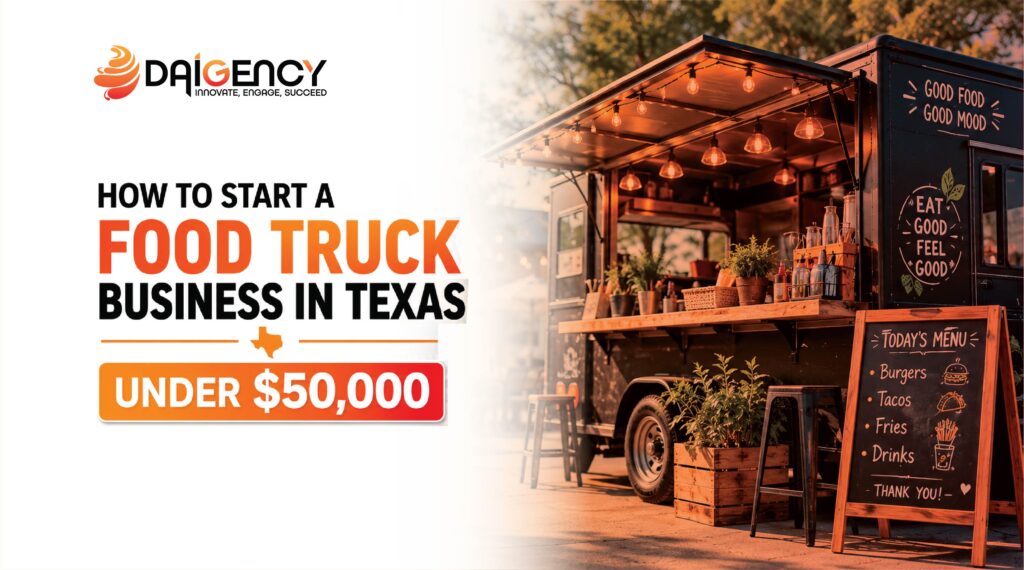
Starting a food truck business can be a good way to enter the food industry without the cost of opening a traditional restaurant. In Texas, food trucks have become a common option for entrepreneurs who want to start a small food business and serve customers at different locations.
Before starting, it is important to understand what a mobile food unit is and what rules apply to it. Under the Texas Food Establishment Rules, a mobile food unit is a vehicle-mounted, self-contained food service operation that can be moved from one location to another. It can be used to store, prepare, display, serve, or sell food. The exact requirements may differ from one area to another, so checking with the local health department is an important step.
Starting a food truck does not always require a huge amount of money. With careful planning, a small operation can be started with a budget of less than $10,000. However, the budget needs to cover important things such as the truck or trailer, food equipment, permits, supplies, and other basic business expenses.
Why Start a Food Truck Business?
A food truck business offers several advantages, including:
- Lower startup costs compared to a restaurant
- Flexible operating locations
- Lower overhead expenses
- Strong profit potential
- Opportunities for business growth and expansion
With the right concept and strategy, a food truck can become a profitable and sustainable business.
FOOD TRUCK MARKET ANALYSIS
The food truck market size is expected to grow from USD 4.41 billion in 2025 to USD 4.71 billion in 2026 and is forecast to reach USD 6.46 billion by 2031, reflecting a 6.52% CAGR during the forecast period (2026-2031).
Quick Overview of Estimated Costs
| EXPENSE CATEGORY | ESTIMATED COST |
|---|---|
| 1. Used Food Trailer | $20,000 – $40,000 |
| 2. Equipment | $3,000 – $7,000 |
| 3. Licenses & permits | $1,000 – $3,000 |
| 4. Inventory | $2,000 – $4,000 |
| 5. Emergency fund | $2,000 |
| 6. Marketing & Branding | $2,500 |
Start a Food Truck Business in Texas – Step-by-Step Guideline
In this guide, we will look at the main steps involved in starting a food truck business in Texas. This includes choosing a menu, selecting a suitable truck or trailer, understanding permit requirements, preparing for a health inspection, and finding a legal place to operate.
Choose the Right Food Concept
This is where your personality gets to drive. Build a menu that works for your target audience while keeping ingredient costs, prep time, and storage needs in check. The first step is selecting a food concept that is simple, popular, and profitable. A focused menu helps reduce equipment costs, inventory expenses, and food waste.
Popular food truck concepts include:
- Tacos
- Smash Burgers
- Hot Dogs
- BBQ Sandwiches
- Loaded Fries
- Coffee and Specialty Drinks
Starting with a limited menu allows you to streamline operations and maximize profits.
Purchase a Used Food Trailer or Small Food Truck
Purchasing a reliable, turnkey motorized food truck for under $10,000 is virtually impossible. Buying a brand-new food truck can be expensive. To stay within budget, consider purchasing a used food trailer or a smaller mobile food unit. Once you have your vehicle, gather what you’ll need for permitting: license plate number, VIN, make, model, year, and color. Register it with the Texas DMV before you start the permit process.
Estimated Cost:
- Used Food Trailer: $20,000 – $40,000
- Basic Repairs and Upgrades: $1,000 – $3,000
A used trailer can provide everything needed to get started while keeping startup costs manageable.
Obtain Required Licenses and Permits
Work through the permits outlined above in order. Get your sales and use tax permit first, then apply for your mobile food unit permit, then secure your local health department approval. Make sure your team’s food handler certifications are in place before your first health inspection.
Estimated Cost:
$1,000 – $3,000.
Keep copies of every permit in your truck at all times to avoid fines.
Purchase Essential Equipment
Focus only on what is mandatory for your specific menu. Invest only in the equipment necessary for your menu and daily operations.
Basic equipment may include:
- Flat Top Grill or Griddle
- Refrigerator or Cooler
- Food Storage Containers
- Cooking Utensils
- Small Generator (if required)
Keeping equipment purchases simple can significantly reduce startup expenses.
Where to Buy Food Truck Equipment in Texas?
Texas offers several restaurant supply stores that provide equipment for food truck startups. Businesses can purchase essential items such as flat top grills, refrigerators, food storage containers, and cooking utensils from suppliers like Alida Restaurant Supply and Restaurant MegaStore. These suppliers offer both new and used equipment, making them suitable for entrepreneurs working with limited startup budgets. For generators and power solutions, retailers such as Home Depot and Lowe’s provide a variety of portable generator options for mobile food businesses.
Estimated Cost:
$3,000 – $7,000
Branding and Marketing (Professional & Strong Version)
A strong brand and smart marketing strategy play a key role in the success of a business. Start by creating a clean, professional brand identity that includes a unique logo, consistent colors, and attractive menu design. Your food truck should look visually appealing because customers often decide to try your food based on first impressions.
Use digital platforms to grow your reach. Create active social media pages on Instagram, Facebook, and Google Business Profile where you regularly post your location, menu updates, special offers, and customer reviews. This helps you build an audience and attract repeat customers.
You should also invest in simple but effective local marketing such as flyers, banners, and event promotions to increase visibility in high-traffic areas.
Daigency may also help you
For professional branding, logo design, and digital marketing support, you can also work with Daigency, a creative digital marketing agency that helps businesses build strong visual identity, online presence, and customer engagement strategies. This can give your food truck a more professional and competitive edge in the market.
Overall, consistent branding and smart marketing will not only attract customers but also help your food truck grow into a recognizable and trusted local brand.
Ready to Take Your Food Truck Business Online?
Build a professional website that helps customers find your menu, location, and contact details.
Smart Ways for Success
Choose High-Traffic Locations
Operate in areas with strong customer traffic, such as:
- Business Districts
- College Campuses
- Community Events
- Festivals
- Farmers Markets
Such as cities: - · Austin → Highest potential, but more competition.
- · Houston → Best balance of population and opportunity.
- · Dallas → Great for lunch and office traffic.
- · San Antonio → Strong tourism-based demand.
Maintain Food Quality
Consistently delivering fresh, high quality food encourages repeat business and positive reviews, at least one employee with supervisory responsibility must hold a Certified Food Manager (CFM) certification at all times during operation. Maintaining proper food safety certifications and health standards also helps build customer trust and credibility.
Provide Excellent Customer Service
Friendly and efficient service can help build customer loyalty and strengthen your reputation.
Leverage Social Media
Use social media platforms to share your location, menu updates, promotions, and customer reviews. Consistent online engagement can help attract new customers and grow your brand.
Closing Note: Take the first step, stay consistent, and focus on delivering value to your customers every day.
Monitor Performance and Adapt
Regularly monitor your food truck’s performance and adjust your strategies based on customer feedback, sales data, and market trends. Track important performance indicators such as daily sales, customer satisfaction, and the popularity of menu items to understand what is working best. Use this information to improve your operations and make better business decisions.
Keep your menu updated by following current food trends and introducing new or seasonal items. Limited-time offers or special collaborations can help attract new customers and increase sales. Also, invest in regular training for your staff to improve their skills and ensure consistent service quality, which helps maintain a strong customer experience and business growth.
Conclusion
Starting a food truck business in Texas with an under budget is not just a dream, it is a practical and achievable opportunity if you plan it wisely. By choosing the right food concept, keeping your setup simple, managing costs carefully, and focusing on strong branding and marketing, you can build a solid foundation for your business. Over time, small improvements in your menu, service, and marketing strategy can turn a basic food truck into a well-known and profitable brand.
The key to long-term success is adaptability. Monitor your performance, listen to customer feedback, and stay updated with market trends. With dedication, patience, and the right strategy, your food truck can grow from a small startup into a strong and recognizable business in the Texas food industry.
“Great businesses don’t start with big money, they start with a strong mindset and a clear vision.”
FAQs for Food Truck Business
- Can I start a food truck business in Texas with $10,000?
Yes, it is possible to start a small food truck or food trailer business in Texas with $10,000 if you use a used trailer, simple equipment, and a limited menu. However, proper planning and budgeting are very important.
- Do I need a license to operate a food truck in Texas?
Yes, you need several permits including a business license, Texas Sales Tax Permit, food handler certification, and a health department permit depending on your city.
- What is the cheapest food truck business idea?
Simple food concepts like tacos, hot dogs, burgers, fries, and drinks are the cheapest to start because they require less equipment and have low food costs.
- Where can I park my food truck in Texas?
You can operate in approved public areas such as business districts, events, festivals, private properties (with permission), and designated food truck zones depending on city rules.
- How do food truck finder apps help my business?
Food truck finder apps help customers track your live location, check your menu, and discover your truck easily, which increases visibility and daily sales.
Smart and Successful Guidelines:
Digital marketing success doesn’t stop here. Explore our related articles for more actionable tips on SEO, website growth, and online marketing strategies for businesses.
- Why Digital Marketing Is Essential for USA Businesses in 2026
- Best Affordable SEO Packages for Small Businesses in 2026
- Wix vs WordPress vs Squarespace: 2026 Breakdown
- How to Rank Website on Google in 2026
- What Does Local SEO Actually Cost?
- Best Free SEO Tools in 2026
- What Does Local SEO Actually Cost?
- Digital Marketing Strategies for Small Businesses in a Low Budget
- How to start a beauty salon business in Houston under $10,000
- How to Start a Nonprofit Organization with No Money
- The Ultimate Colour Guide for 10 Different Industries in 2026
- The Ultimate Guide to Modern App Development in 2026